You are in the between times. You have dressed for the theater but you neglect your bouquet and your escort because you are distracted by dreams again.
A pearl to compliment a powdery blue gown and even more powdery skin…
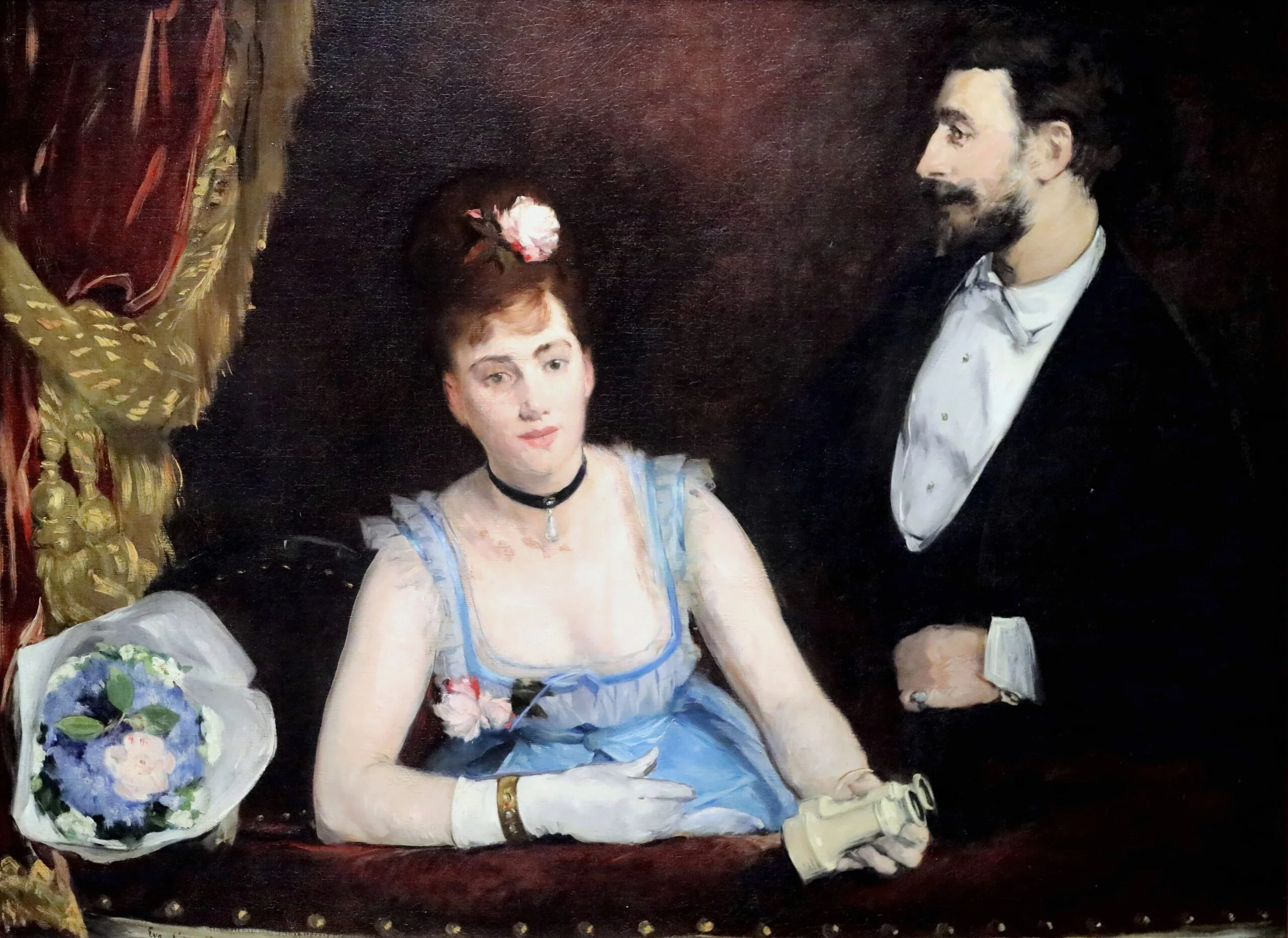
“Une loge aux Théâtre Italiens” Eva Gonzalès 1874
Eva Gonzalès (born 1847) quietly slipped under the radar of the 1800s. Unlike her french impressionist contemporaries Renoir, Berthe Morisot, Monet and Mary Cassatt, who names were widely circulated—then and now—Eva kept under the cover of her canvas, honing her skills in tune with the impressionist times. Like Cassatt, she studied with Charlie Chaplin and the two share similar themes in their work, environments that were fitting or perhaps confined, to women of their class for the time. Similarities can be seen in their famously moody artwork depictions of the theater box (loge).
In Gonzalès’ first works her style reflects her mentor’s, painting in warmer, muted tones. By 1869, Gonzalès was introduced to Édouard Manet at a social event. The pair hit it off artistically and Manet took Eva on as his only official student. As the situation had an implied intimacy, Eva’s legacy was perhaps predominantly bound to the idea of a scandal more than awarding fame from her works, which took shape as she shifted into her own style. Her portaits turn from fuzzier to wispy and have a ghostly quality, yet the expressions and intention feels defined. I have been an especial fan of Eva’s floral works, partiuclarly her rose paintings, so I was delighted to discover the Petite Palais is currently home to the first ever major retrospective for Gonzalès. The exhibit though well attended, reflected the quiet nature of the artist and did well to depict her evolution through different time and mentorship, including her relationships with her sister and fellow artist and husband Henri Guérard. Sadly, Eva passed away in childbirth at the age of 36, cutting short a body of work which was sure to include many more masterpieces.
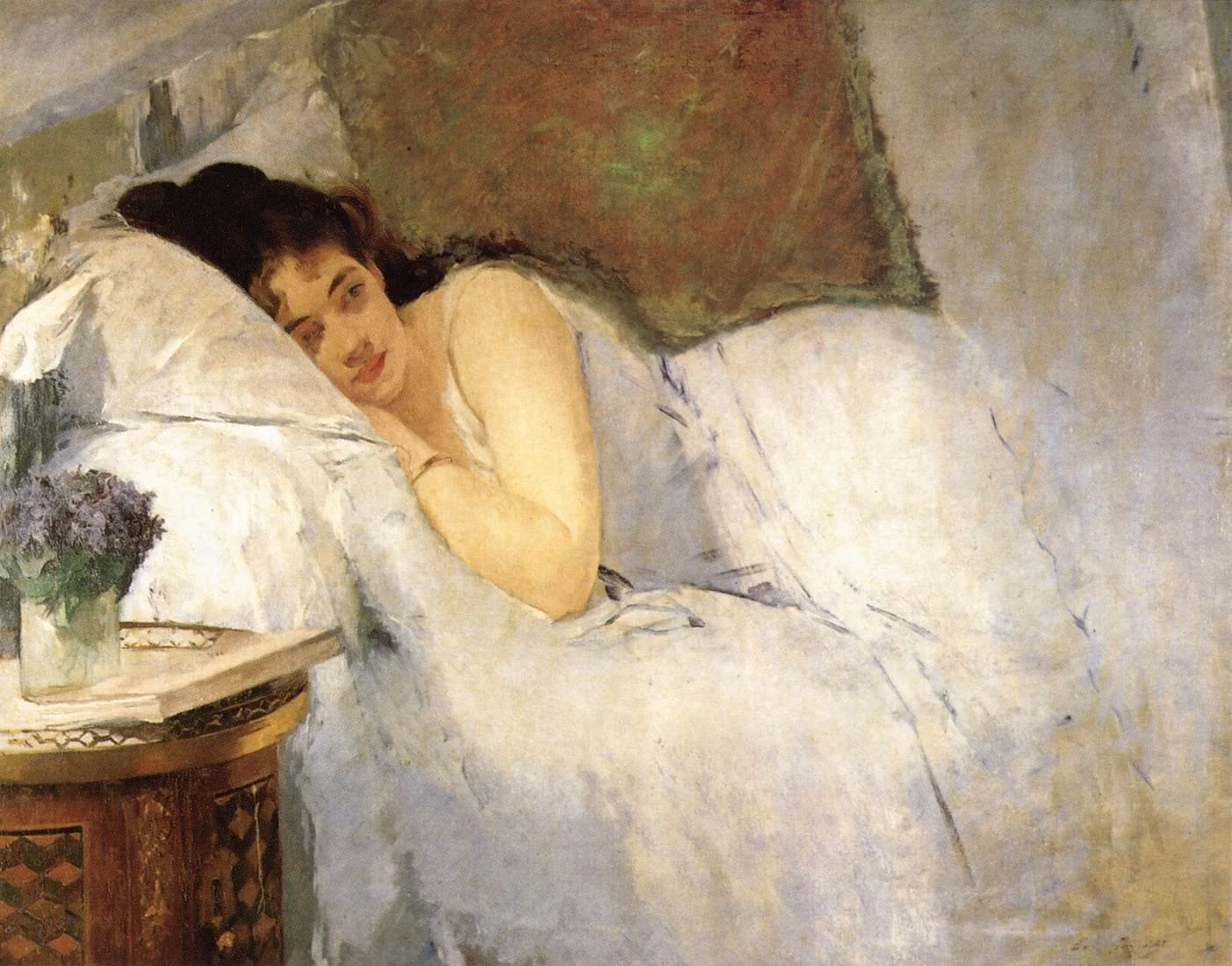
“Le Réveil” Eva Gonzalès 1877
The hydrangea is elusive. Its stunning splay rivals the rose, and depending the region you are from, could very well be more revered than its fragrant garden partner. It’s not as easily captured in art, especially painting. It’s almost as if one can only capture the spirit of the hydrangea, or hortensia, it’s essence. And it’s equally the same in a vase, only lasting for what feels like fleeting moments. Moving through Eva Gonzalès exhibit, my lens was fixed on flowers, and while there was a rose delicatly placed in the hair here and bodice there, the phantom in blue that appeared in the majority of the works was indeed the hydrangea.
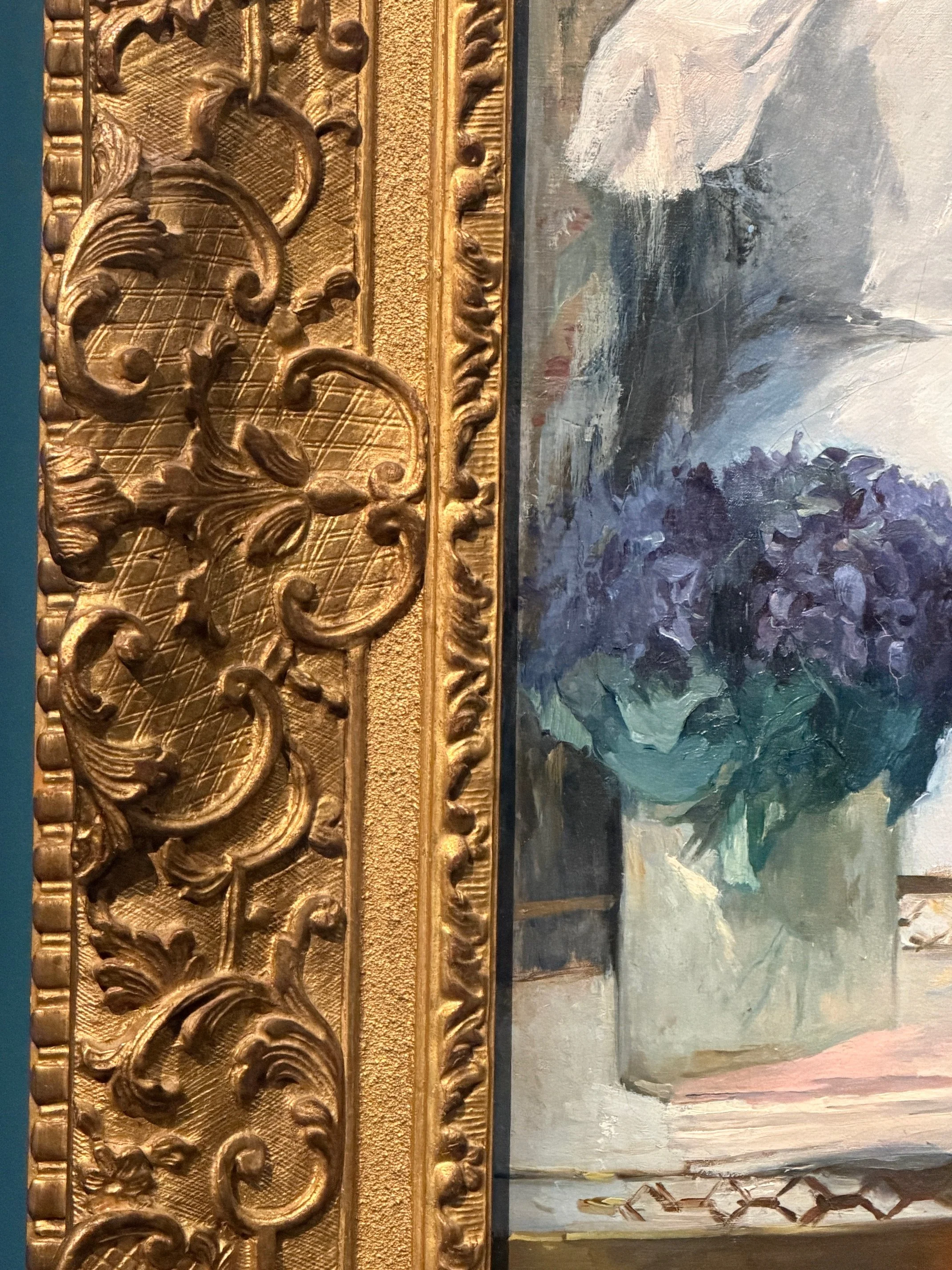
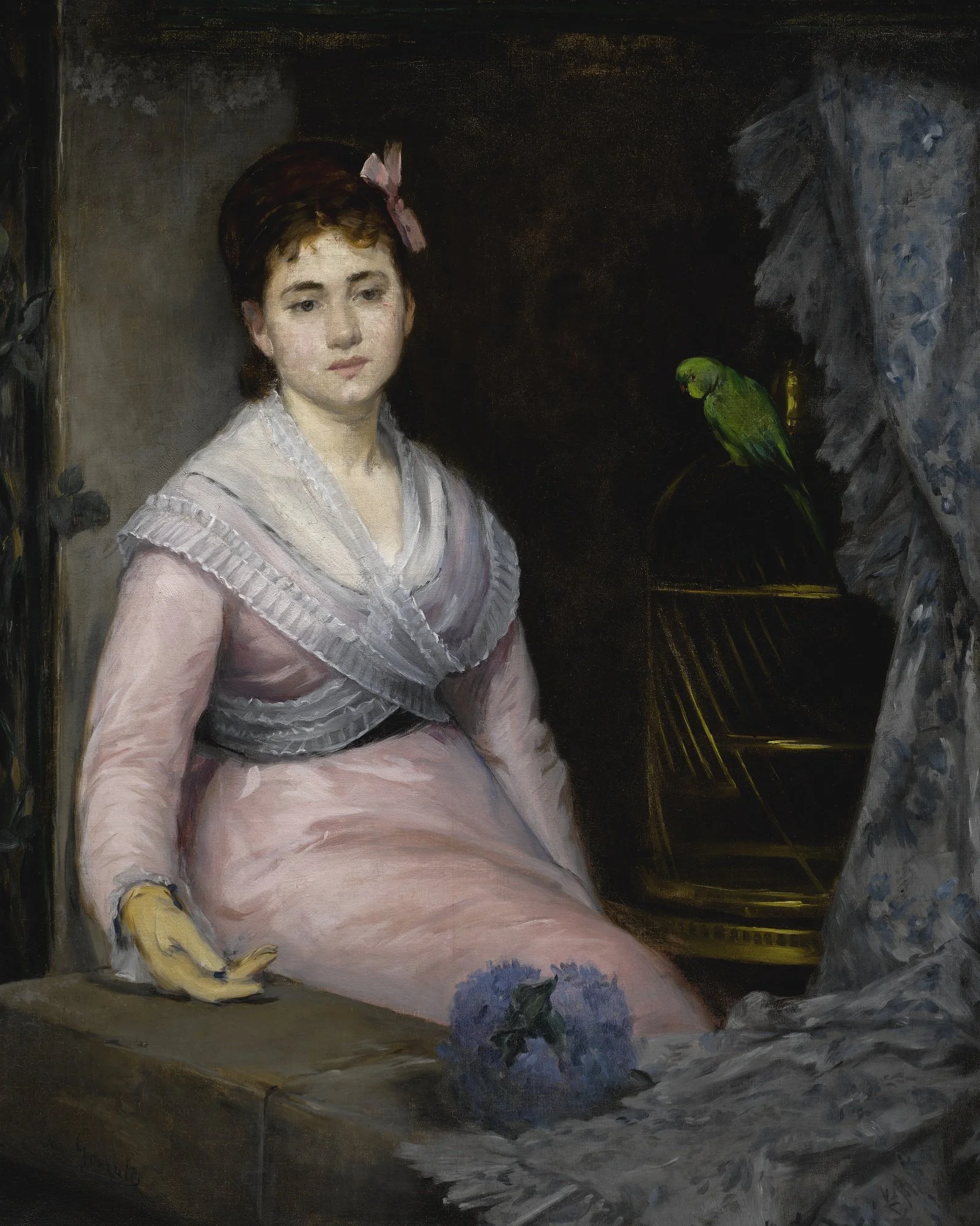
“L'Indolence” Eva Gonzalès 1871
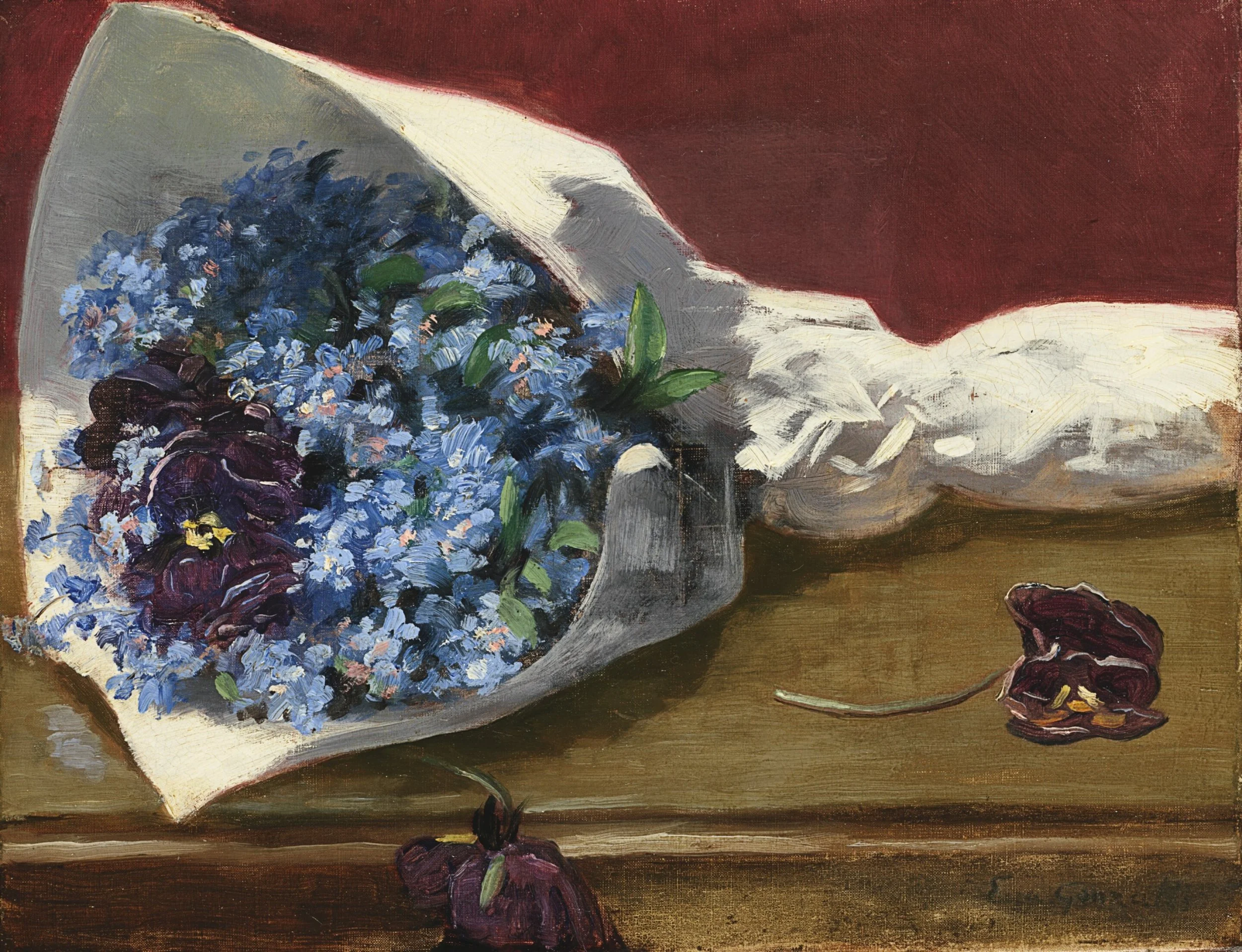
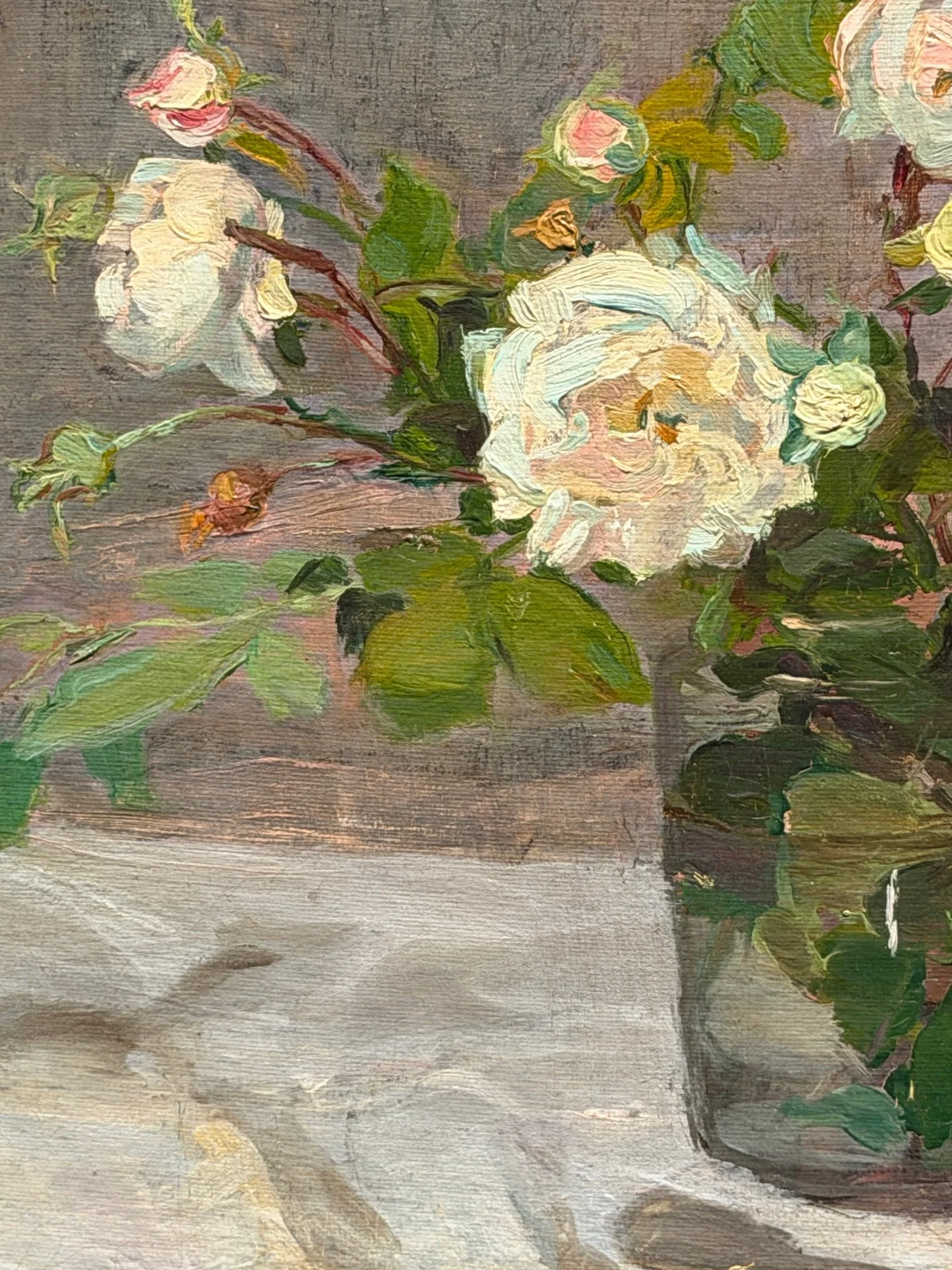
“Bouquet de fleurs” Eva Gonzalès 1873
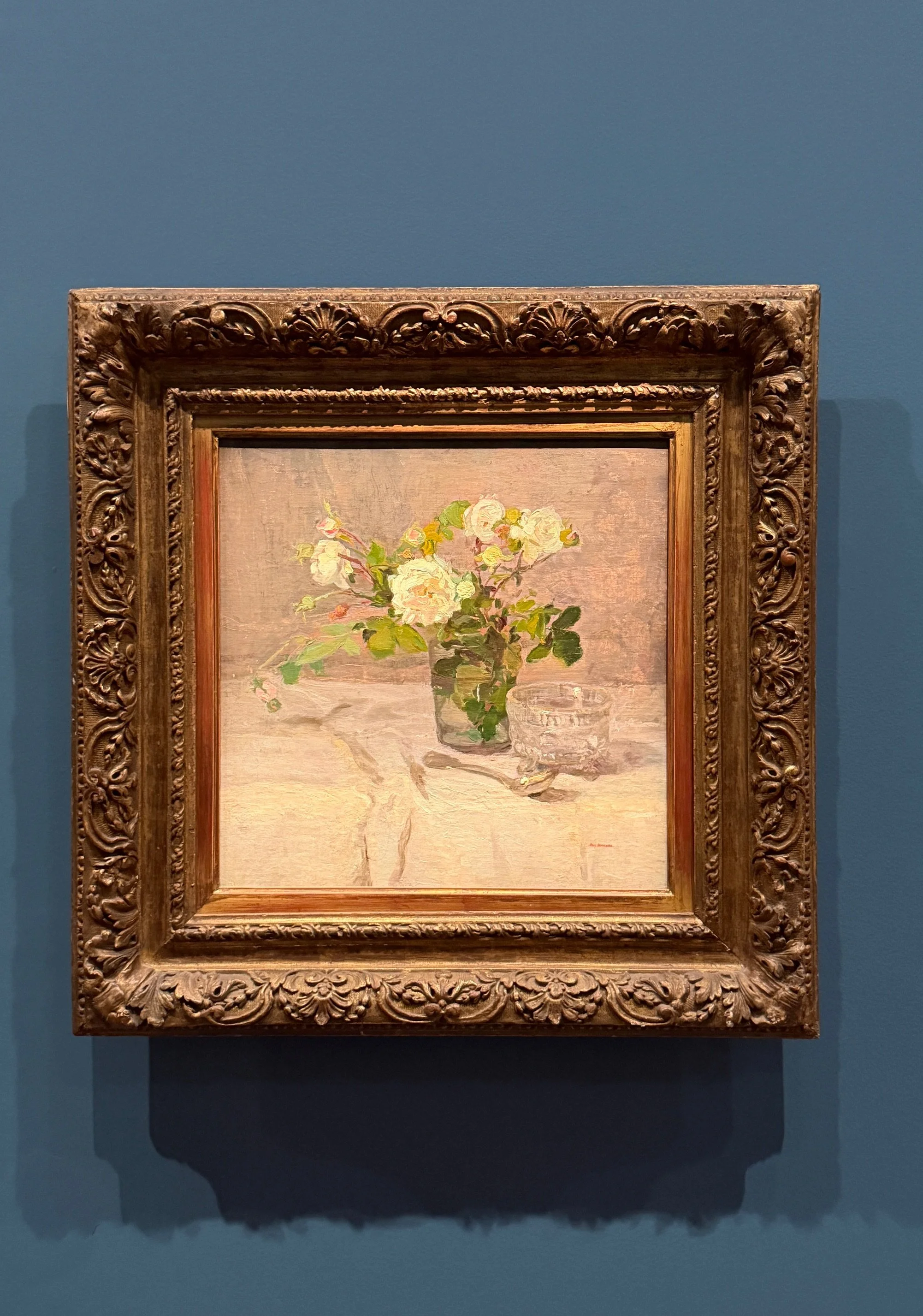
“Roses dans un verre” Eva Gonzalés 1875