
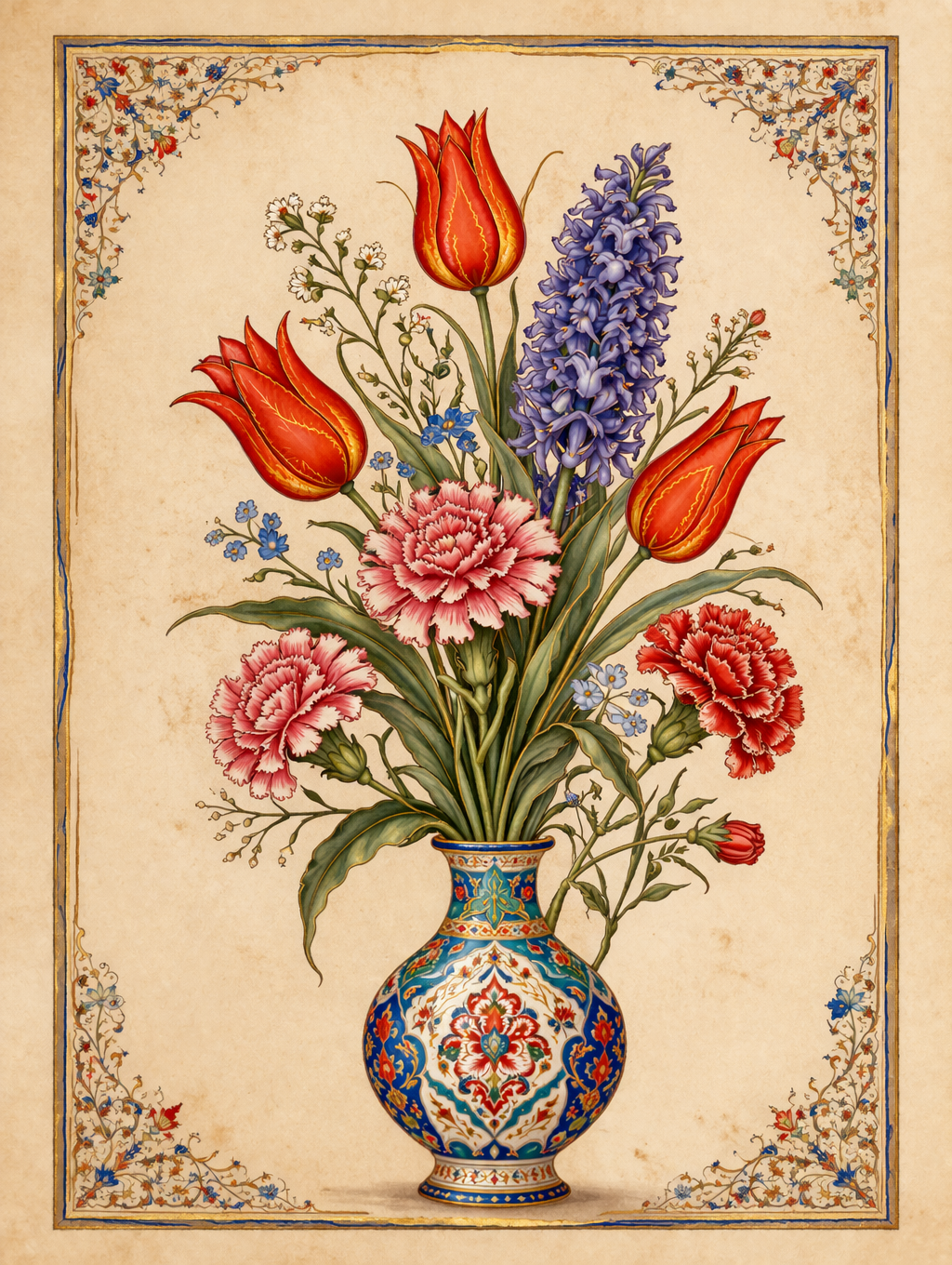
The act of giving flowers is symbolic in itself. Flowers are an expression of love, thoughtfulness, peace, beauty, comfort, support—there is infinite room for interpretation. There are truly no wrong answers when selecting them for an occasion or ceremony, however, they have a long and storied history including a “secret” language of their own. The symbolism of flowers reaches further then we can pinpoint, but records as we can trace them begin around 17th century Constantinople. The wife of the British ambassador to the Ottoman Empire is credited to bringing the spark to Europe with a letter to her husband describing a custom she witnessed of “sending a message of love without writing a word, by assembling objects— flowers, fruit, a feather”. This physical practice of offering objects with special meaning was referred to as Sélam. In today’s culture, the term is a common greeting and expression of well-wishes in Arabic. Another record shows its introduction to Scandinavian courts by French Aubry de La Mottraye around similar timing.
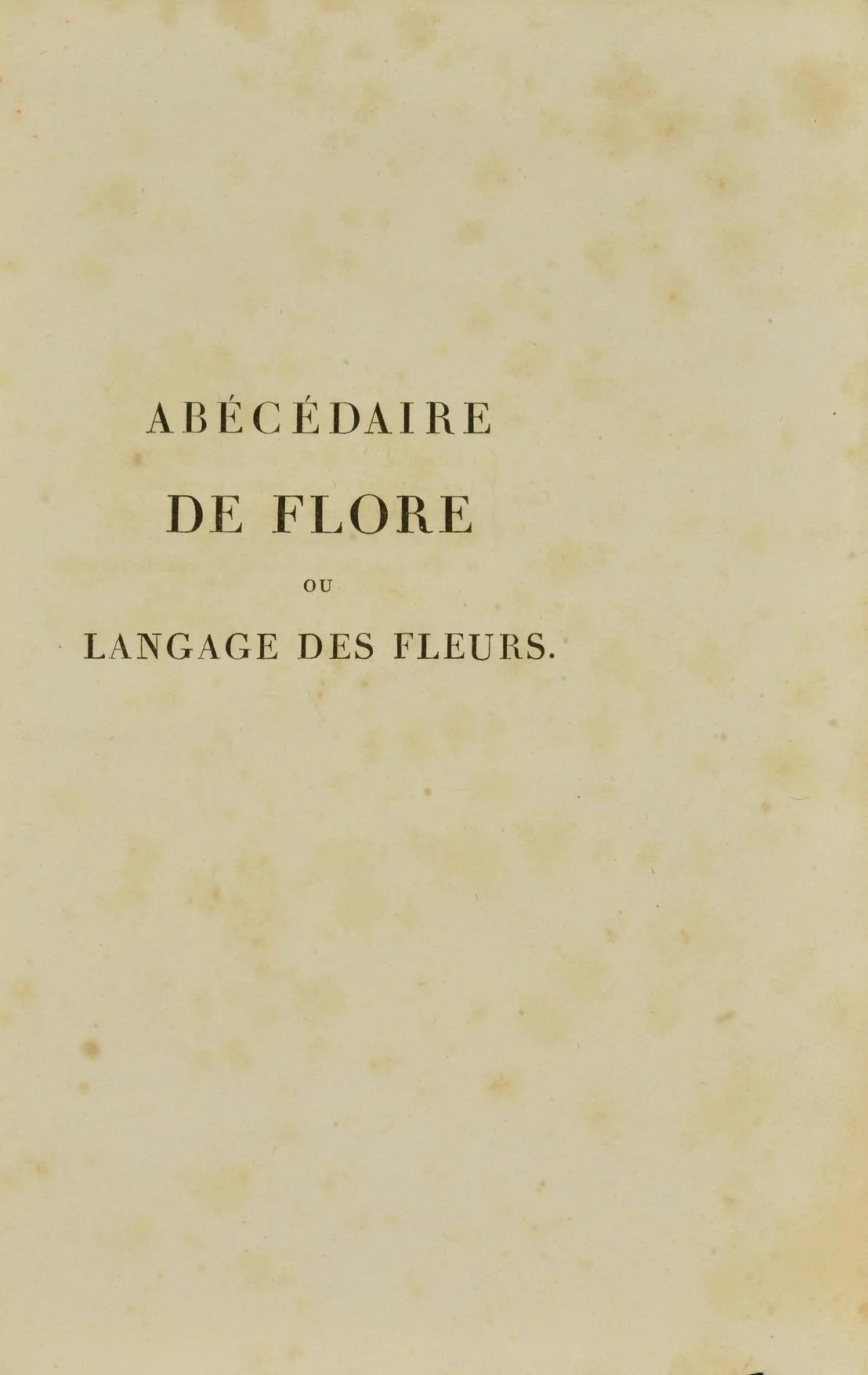
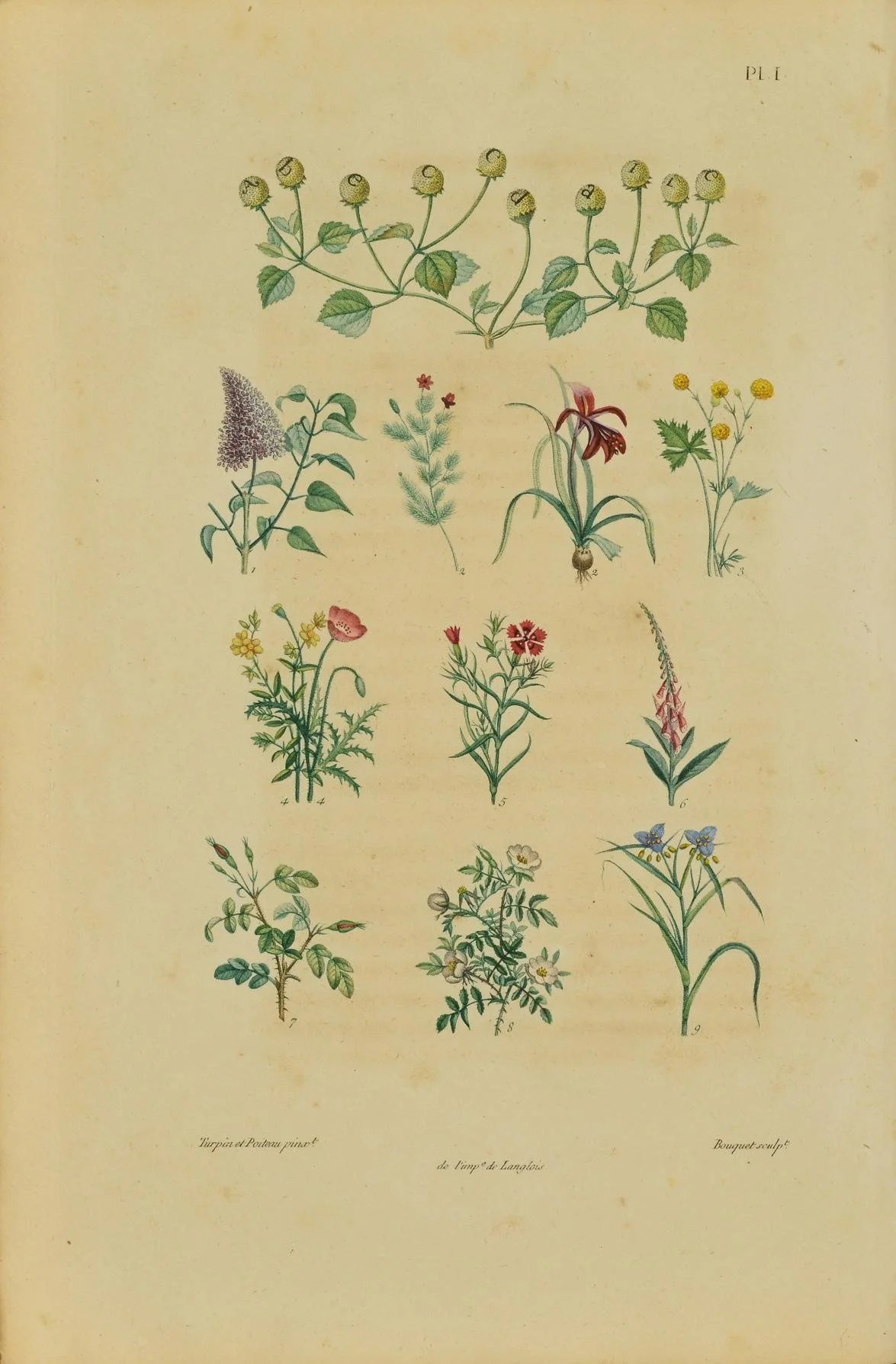
The first published versions of a cohesive Language of Flowers appear in the 19th century. The first, Joseph Hammer-Purgstall’s “Dictionnaire du language des fleurs” credits the origin and history of sélam and goes beyond the works of botanical floral plates typical of the time to begin a new catalog of flowers, associating them with “meaning” suggesting their symbolic nature. Following closely behind and creating the spark to really ignite the movement, “Abécédaire de Flore ou Langage des Fleurs” by B. Delachénaye (1811), “Les Langages des Fleur” (1819) by Charlotte de la Tour (the pen name of Louis-Aimé Martin) go deeper into exploring this newfound communication or “floral language”. These books quickly set ablaze the trend of flowers holding symbolism and this “secret trade” took especial flight in the buttoned up era of the Victorian period.
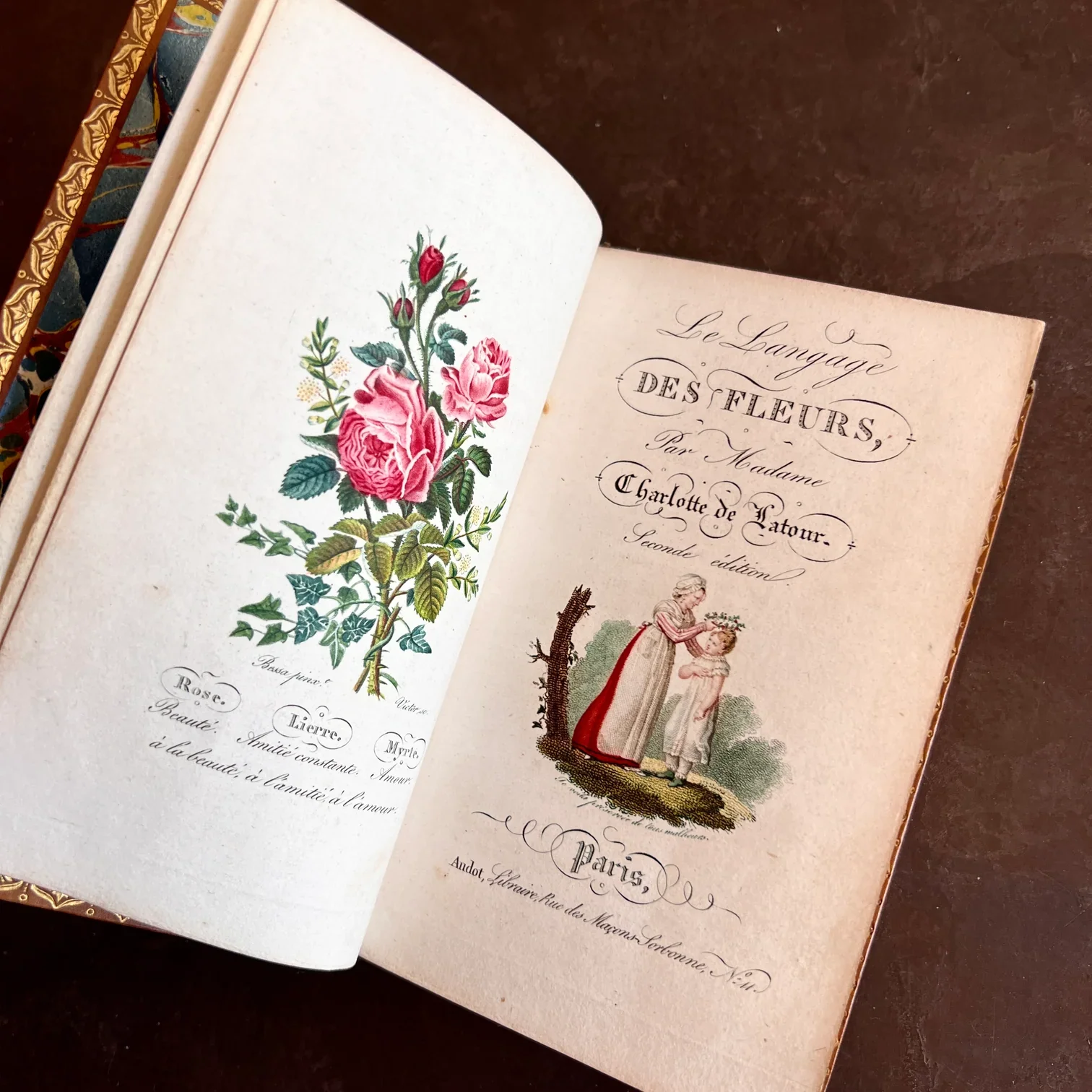
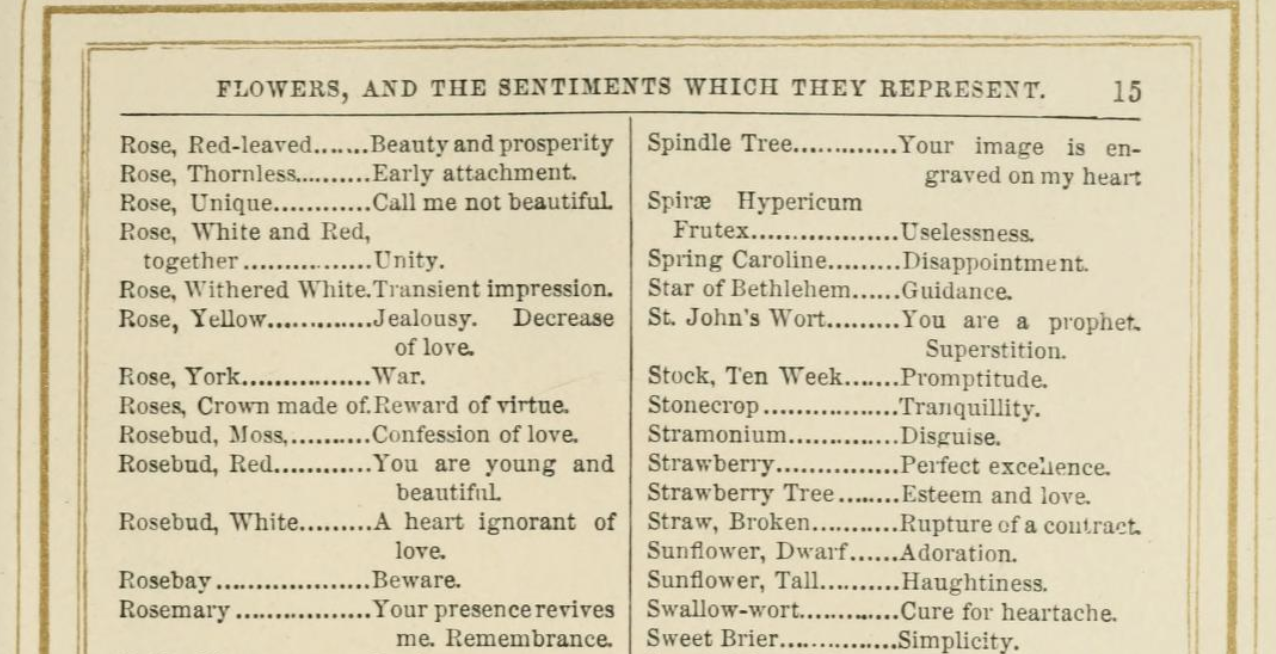
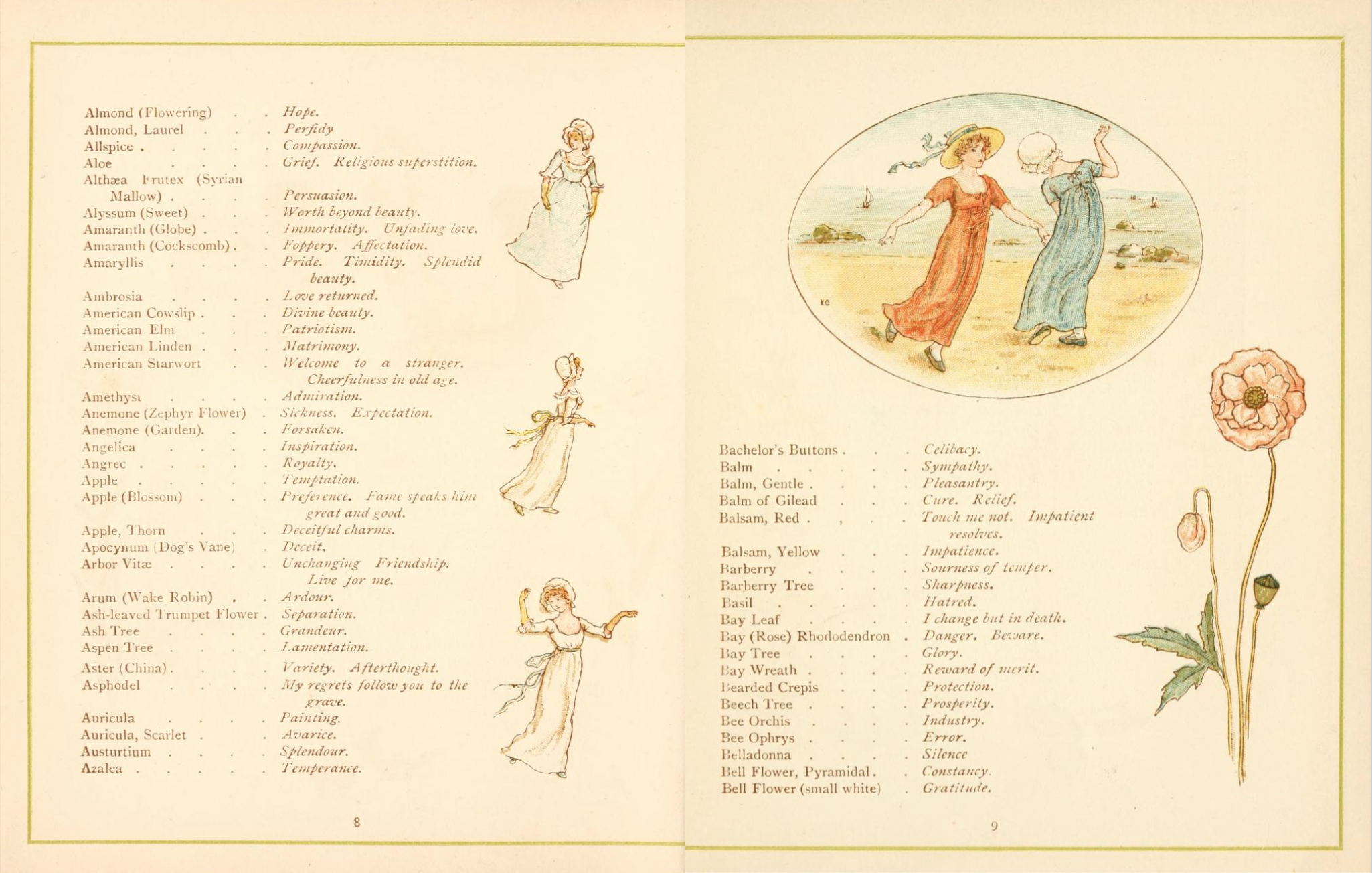
Following the French wave, the 19th century saw a flood of floral encyclopedias. A popular publication was Kate Greenaway’s comprehensive and illustrated “Language of Flowers” 1884. While this language of flowers was becoming widely accepted and cohesive communication, variations to the symbolism emerged by region. For example, British author Henry Phillips adapted Madame de la Tour’s work to reflect the moral sensibilities of the Victorian time.
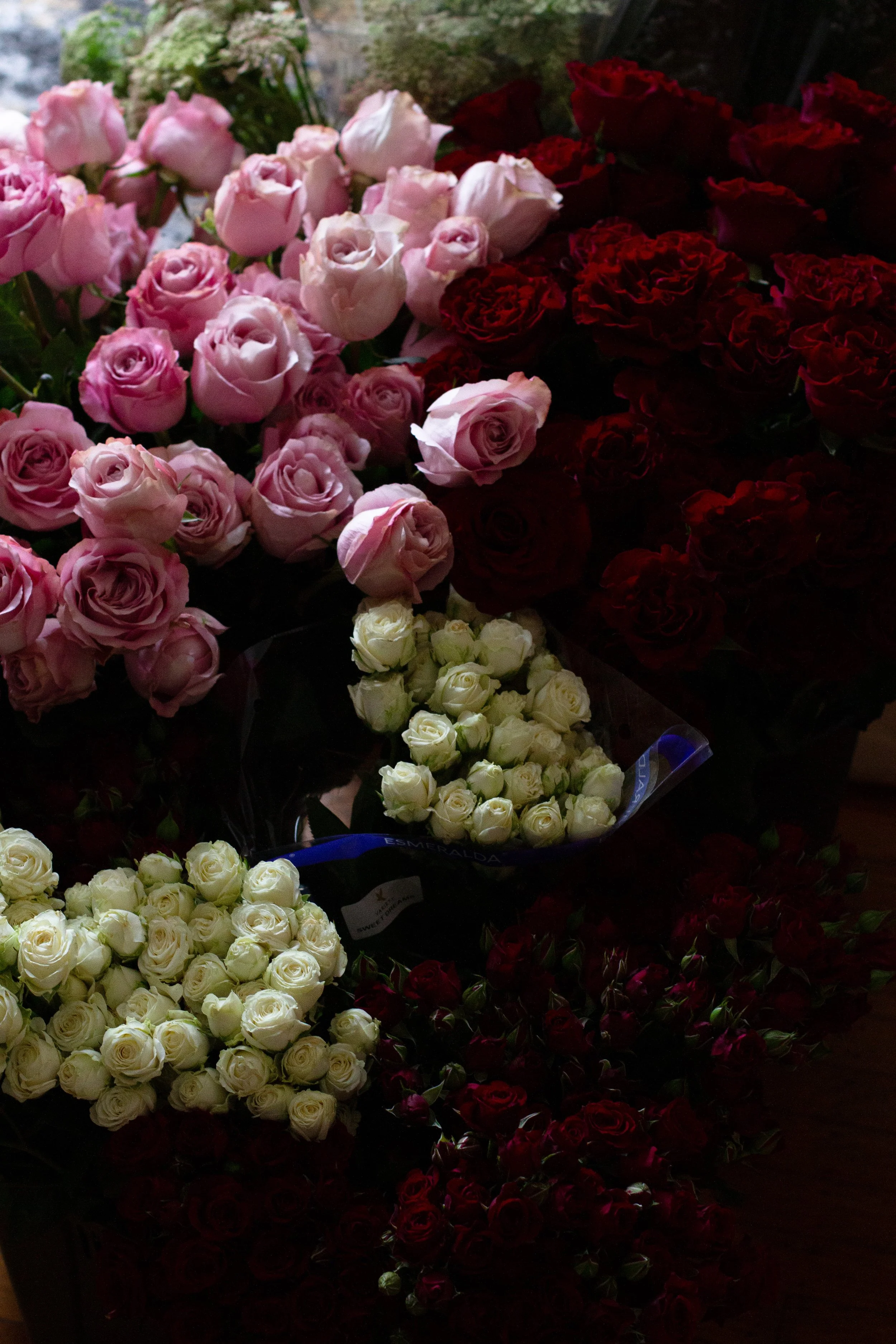
While ultimately it comes down to what the act or flowers mean to you, understanding the historical context and meaning of the language of flowers is a creative way to layer emotion by adding intrigue and intent behind an event. I use floriography in design to add a deeper meaning to the ceremony of what flowers contribute to a mood or space, even if it’s only you and your partner in on the secret.
For further reading on the history and symbolism of floriography, I suggest the following publications:
“Dictionnaire du langage des fleurs” Joseph von Hammer-Purgstall (1809)
“Abécédaire de Flore ou Langage des fleurs” B. Delachénaye (1811)
“Les Langages des Fleurs” Charlotte de La Tour / pseudonym of Louise Cortambert (1819)
“The Sentiment of Flowers; or, Language of Flora” Robert Tyas (1836)
“Language of Flower” Kate Greenaway (1884)
“The Language of Flowers: A History” Beverly Seaton (1995)
“Floriography: The Myths, Magic & Language of Flowers” Sally Coulthard (2021)